ifc-0284
18.14.4 Strong generators change the opportunity
18.14.4 Strong generators change the opportunity
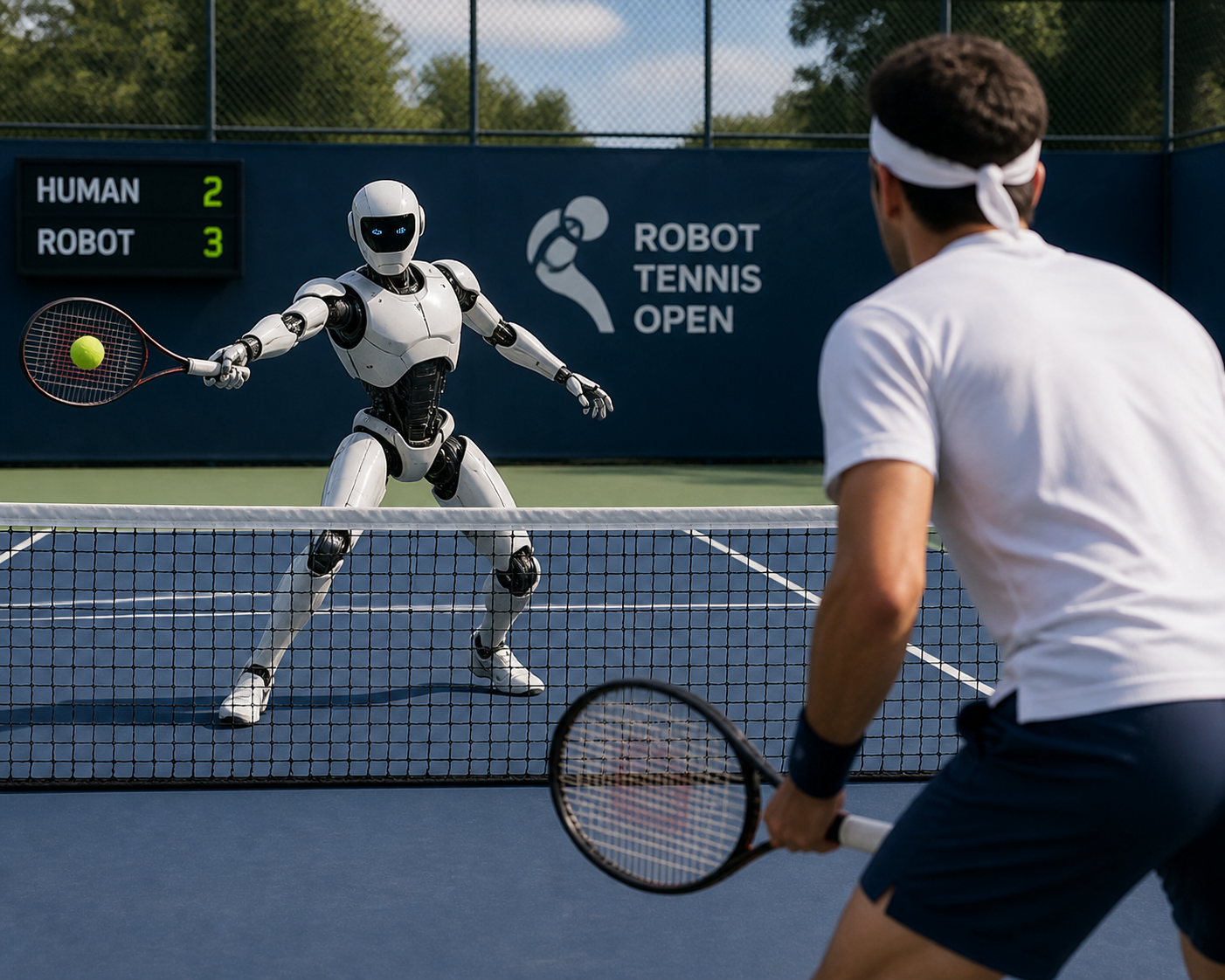
Outputs obtained through the OpenAI Playground show why the ARTISTIC claim must remain provider-conditioned. A terse request for a robot playing tennis produced a coherent scene with two opponents separated by the net, one racket each, and one ball. A similarly terse pool request produced a plausible mid-game shot. Under their generic visible-scene contracts, the correct action is admission without editing.
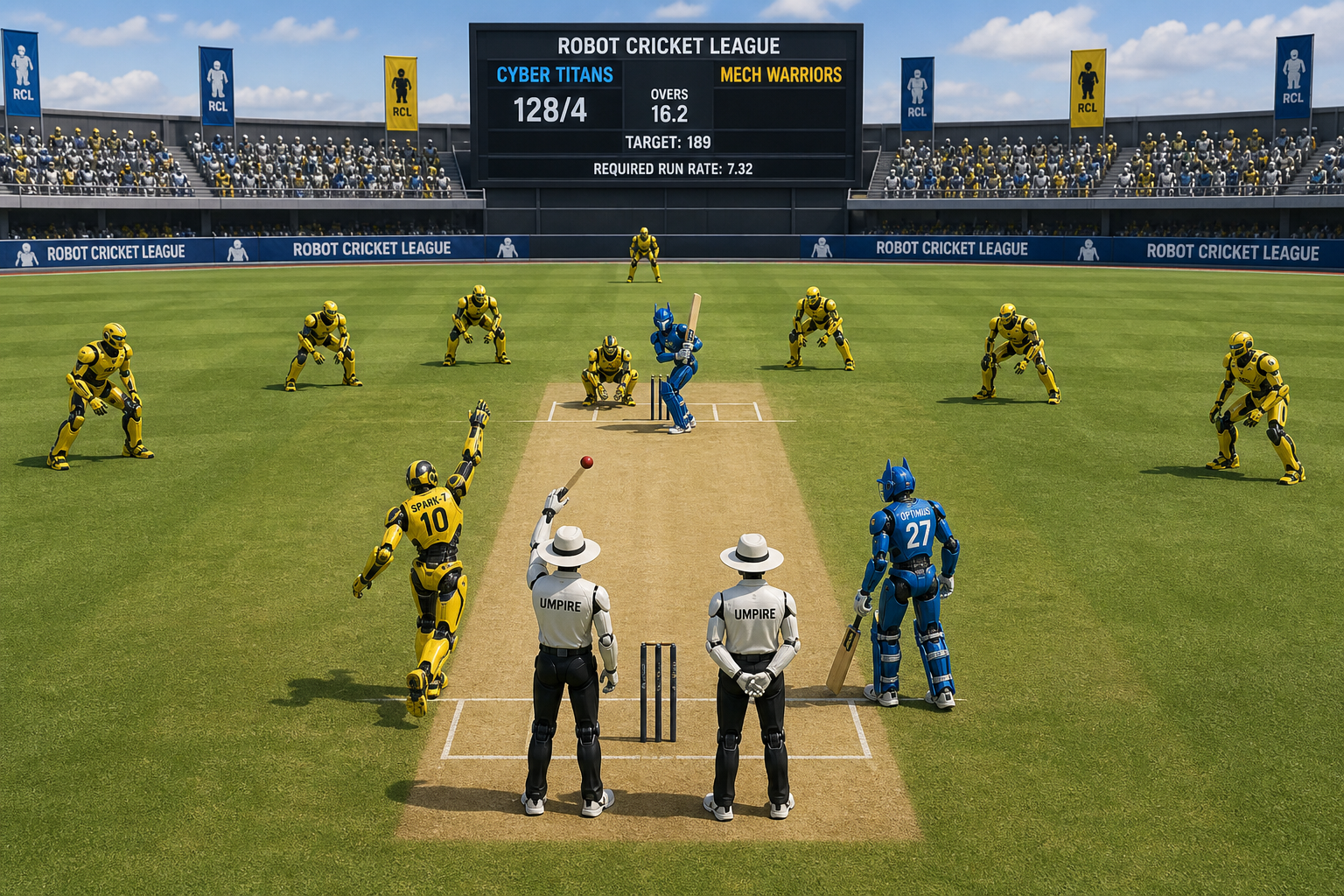
The same interface also produced more subtle failures under stronger contracts. A wide cricket request asking that every player and both umpires be visible generated fewer than the required eleven fielders, placed both umpires side by side at the bowler’s end rather than assigning one to square leg, and appeared to attach the ball to a rod or malformed object associated with an umpire. The nouns are present, but cardinality, spatial role, topology, and event provenance do not compose. A bases-loaded baseball image successfully placed three runners, yet assigned the catcher the blue uniform of the batting team while the pitcher wore the opposing red-and-white uniform. That failure is captured by the typed compatibility law
|
Challenge case |
Structural reading |
ARTISTIC decision |
|---|---|---|
|
Firefly cricket |
Missing roles, incomplete pitch, foreign object, and ball scale defect |
Global repair; retain after manual audit |
|
Nano Banana cricket |
Duplicate role and missing bowler |
Rebind roles and reconstruct delivery |
|
Nano Banana baseball |
Incompatible action phases and excess agents |
Select pre-pitch state; provisional admit |
|
Nano Banana tennis |
Opponents on same side; duplicate and embedded ball |
Repair topology and contact geometry |
|
OpenAI tennis and pool |
Generic visible-scene obligations satisfied |
Admit unchanged |
|
OpenAI close cricket |
Locally coherent; global roles outside the frame |
Admit with global uncertainty |
|
OpenAI wide cricket |
Global count, umpire-position, and ball-source violations |
Repair or regenerate |
|
OpenAI baseball |
Bases loaded, but catcher bound to the offensive team |
Localized attribute repair |
These observations are case studies rather than matched estimates of provider quality. Prompts, seeds, aspect ratios, sampling policies, model revisions, and editing interfaces were not controlled across systems. A proper benchmark must freeze those variables where interfaces permit and report both raw competence and marginal ARTISTIC gain:
where \(p\) indexes the provider and \(I_p^+\) is the retained output after any selective intervention. A strong base model may have large \(B_p\) and small \(\Delta _p\); ARTISTIC may still be valuable as a certificate for a private, high-cost, or exact domain contract. In casual generation, the same additional verification cost may not be justified.