ifc-0283
18.14.3 Three kinds of Nano Banana repair
18.14.3 Three kinds of Nano Banana repair
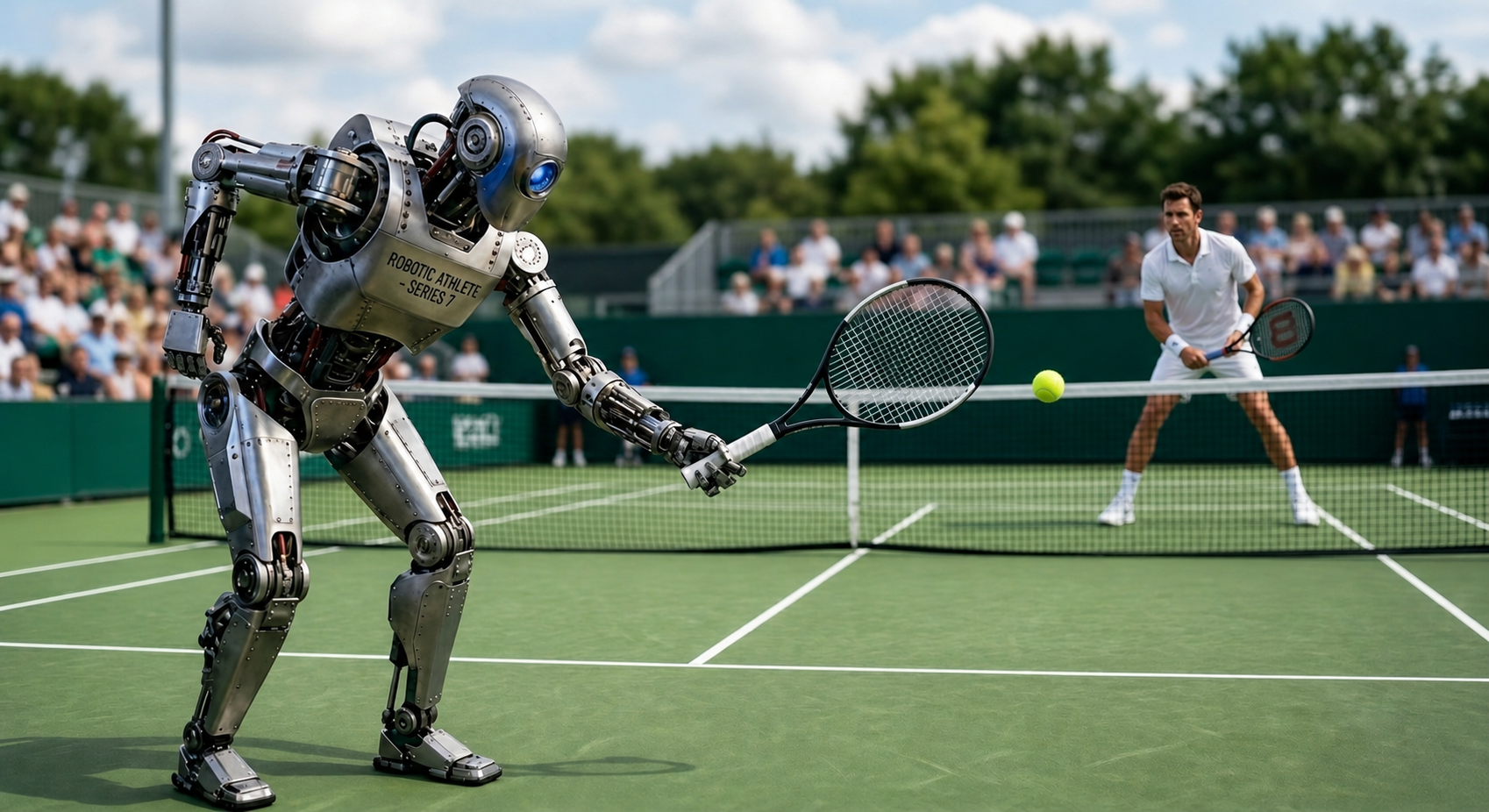
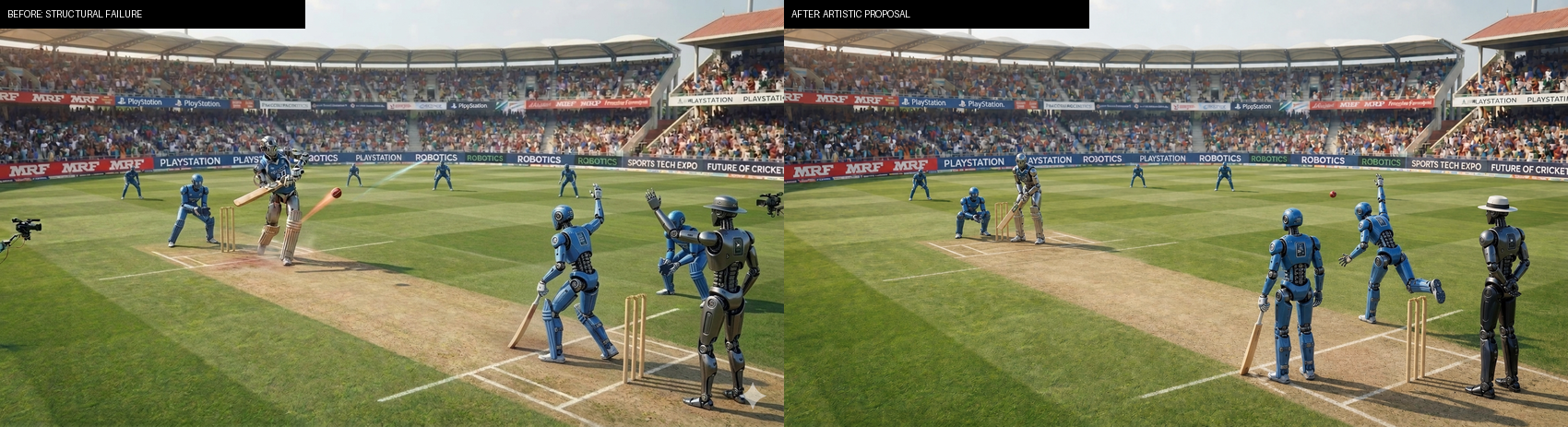
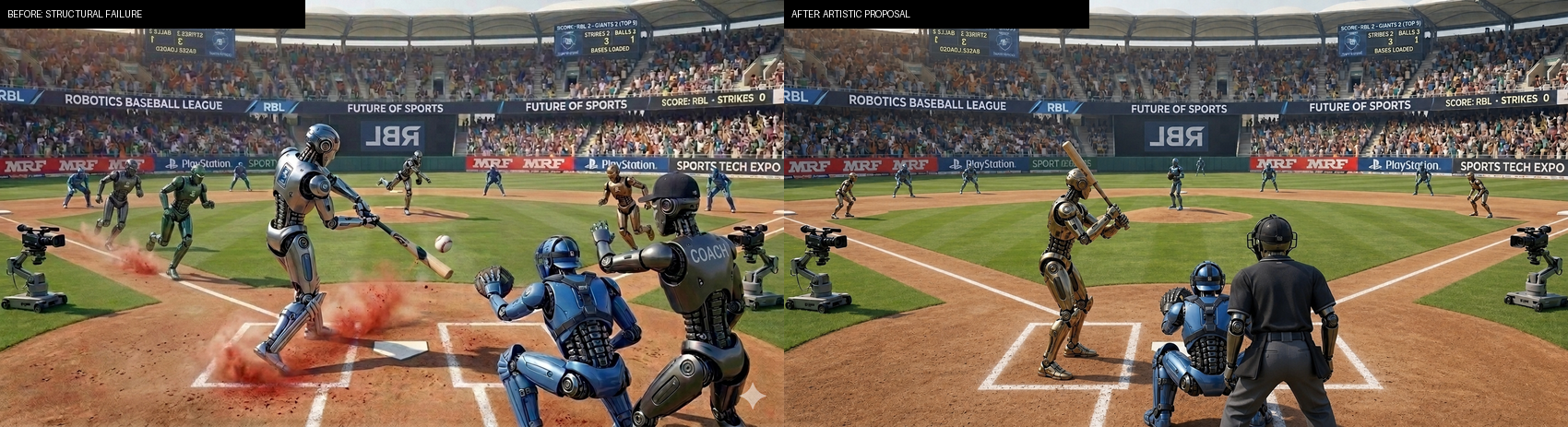
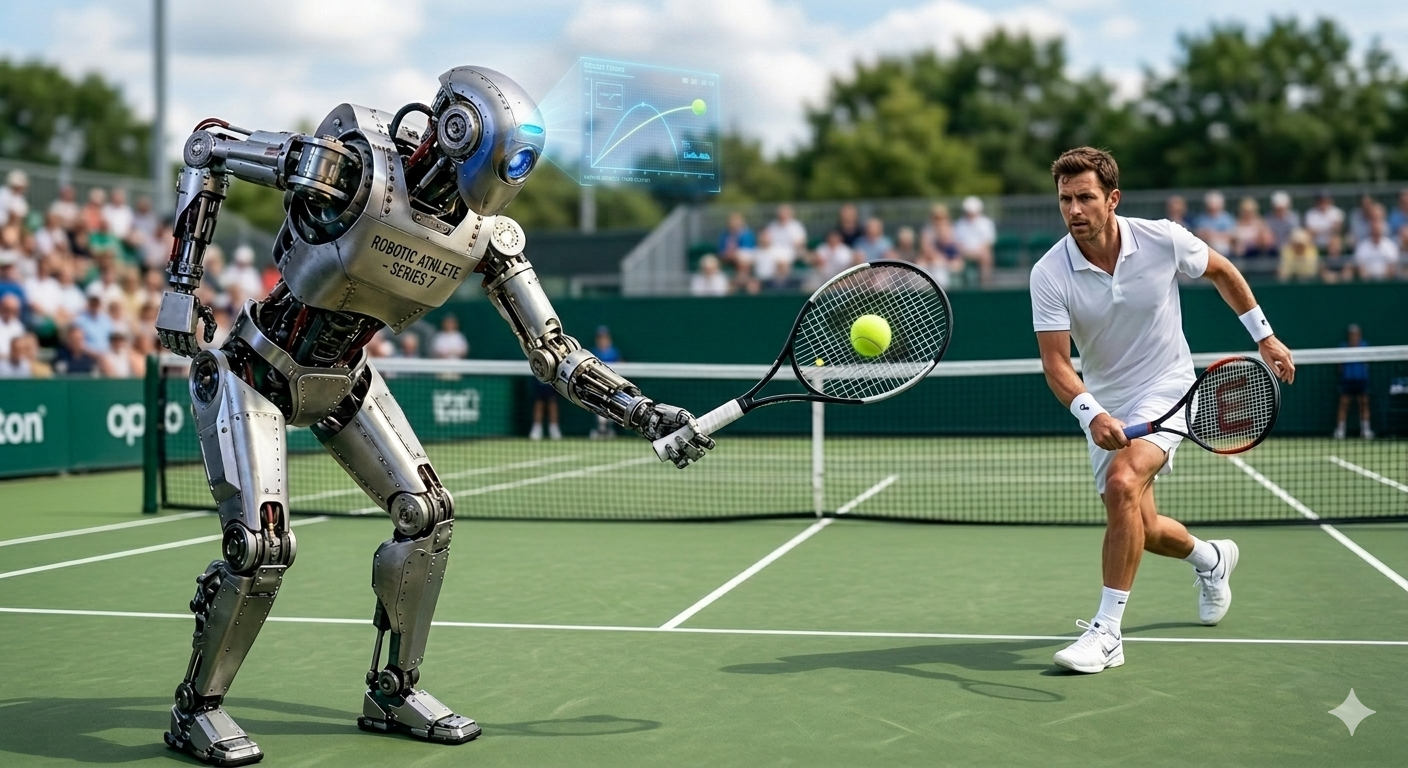
The Nano Banana Lite cases in Figure 18.7 separate three failure types that a scalar image-quality score would tend to collapse. In cricket, the objects are plausible but role binding is wrong: a bowler is missing, a second wicketkeeper-like figure occupies the bowling end, and the non-striker’s gesture mixes action phases. The retained reconstruction reassigns those roles into one delivery. In baseball, runners, bat contact, dust, and a misplaced coach combine incompatible moments. ARTISTIC chooses a pre-pitch bases-loaded state and reconstructs the diamond around that temporal declaration. In tennis, both opponents begin on the same side of the net, the principal ball intersects the robot’s strings, a second small ball is visible, and a holographic display substitutes for physical trajectory. The repair changes the opponent topology by transporting the human behind the net and restoring one-ball rally geometry.
These cases were edited with complete game-state declarations. They therefore demonstrate contract-guided proposal and admission, not autonomous acquisition of cricket, baseball, or tennis. Their importance is diagnostic: role binding, temporal phase, and relational topology require different observers even when all three failures are colloquially described as “bad generation.”
Role repair. A duplicate wicketkeeper-like role and ambiguous non-striker action are replaced by a bowler and a waiting non-striker, yielding one temporally and spatially coherent delivery.
Temporal-state repair. A collage of contact, advancing runners, dust, and coaching is replaced by one provisionally admitted pre-pitch bases-loaded configuration.
Topological repair. The human is moved to the opposite half-court; one ball is placed beyond the robot’s strings; and the duplicate ball and holographic overlay are removed.
Before
After