ifc-0282
18.14.2 A sealed Firefly cricket challenge
18.14.2 A sealed Firefly cricket challenge
. What produced the repaired pixels? A human supplied the cricket declaration and source-image diagnosis. ARTISTIC compiled them into one verbatim image-editing instruction specifying the required roles, cardinalities, spatial relations, and preservation constraints. A built-in black-box image editor then received the source image and that instruction. Exactly one call was made; the single output was retained regardless of outcome, with no candidate selection or residual tuning. The preregistered manual audit was performed at the clause level. Thus ARTISTIC supplied the theory, diagnosis, contract, and admission record; the editor supplied the pixels. No hidden diffusion trajectory was observed or altered.
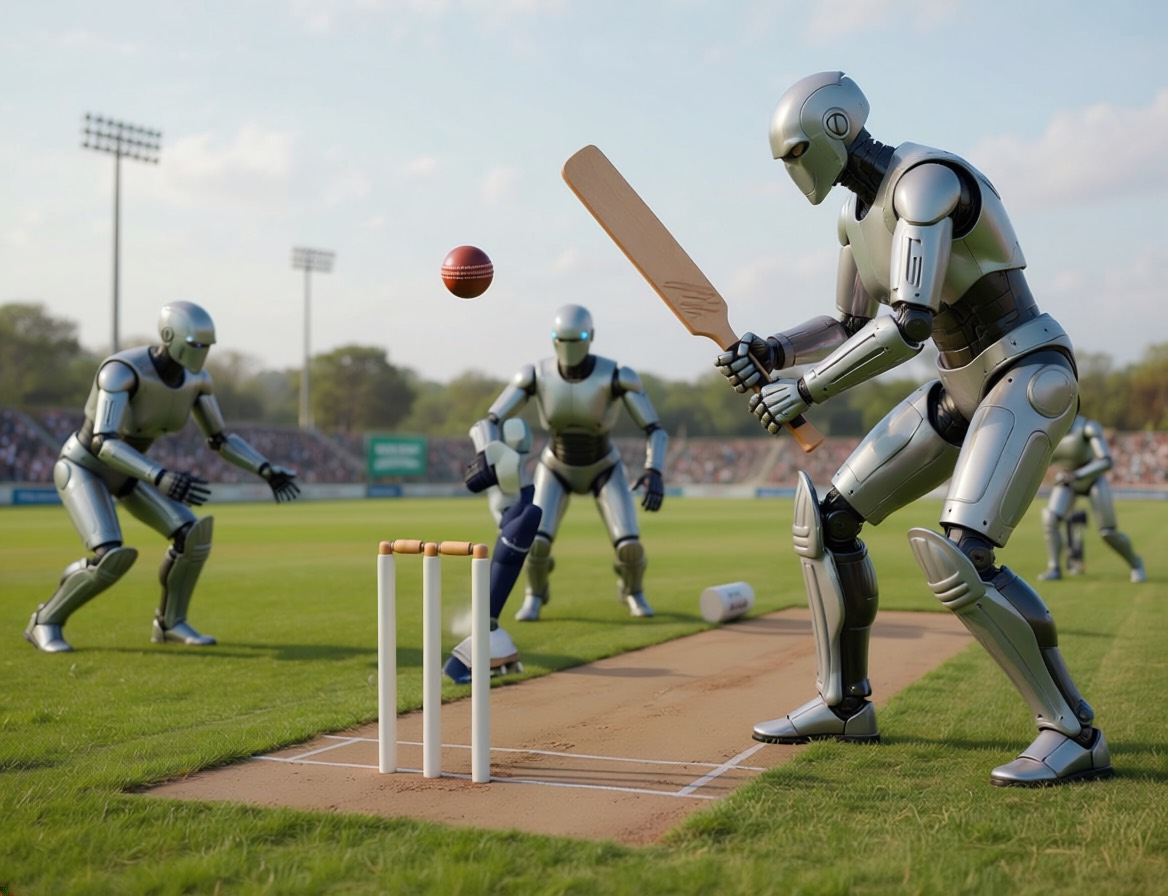
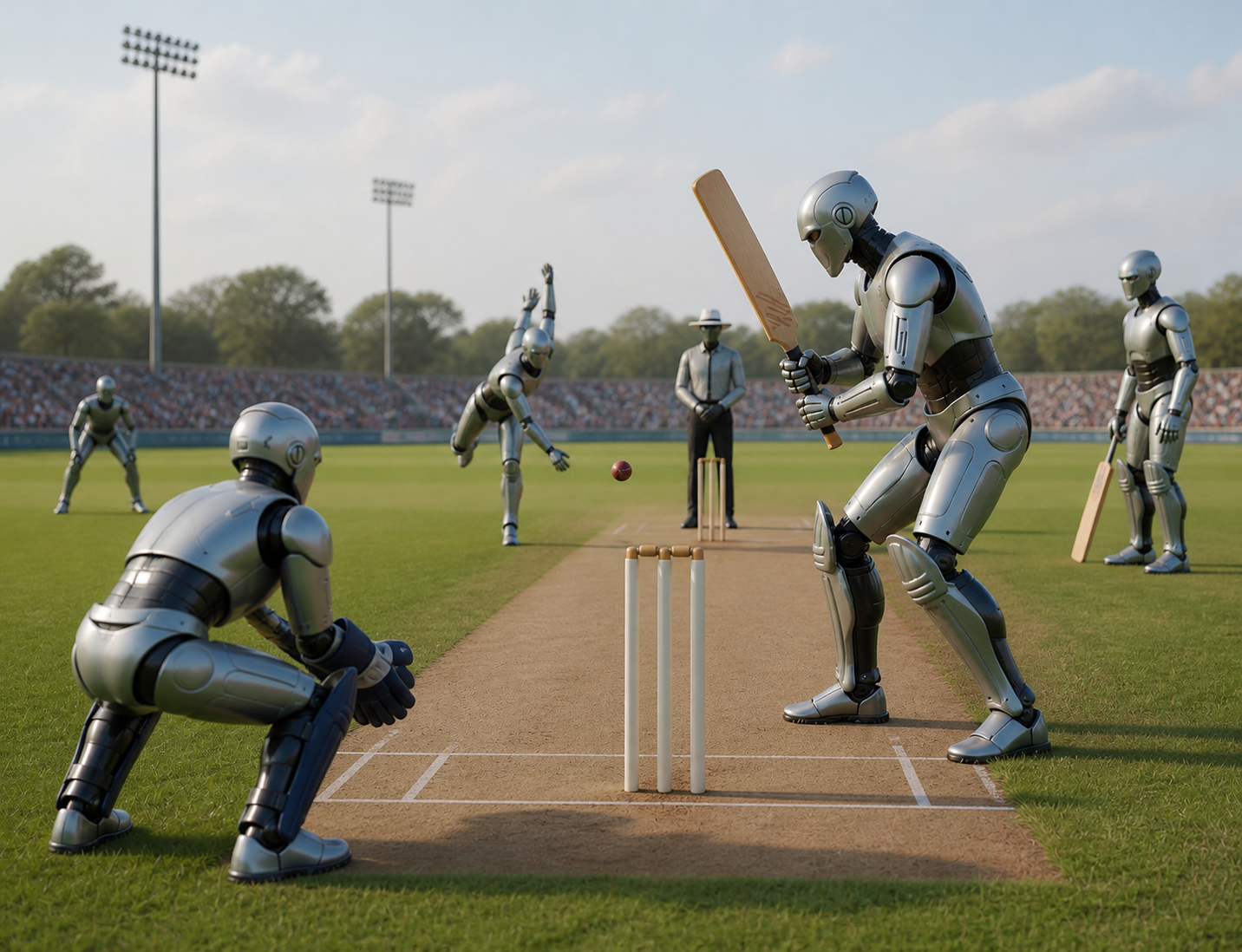
Figure 18.6 records a one-pass external challenge using an image produced by Adobe Firefly 5. The original is aesthetically convincing and recognizably cricket-like, but it has no visible bowler, wicketkeeper, non-striker, or umpire; only one coherent wicket; an implausibly large ball; and an unexplained white cylinder on the pitch. Before editing, the experiment froze a contract requiring one striker, non-striker, overarm bowler, wicketkeeper, bowler’s-end umpire, live ball, and two pitch-end wickets, while preserving the stadium, daylight, framing, and silver-robot style.
The single retained proposal appears to satisfy every primary visible obligation under the frozen manual audit. It constructs a bowler–ball–striker trajectory, places the wicketkeeper behind the striker’s wicket, separates the non-striker and umpire at the far end, adds the second wicket, rescales the ball, and removes the foreign object. The result is a strong structural repair, but it is not a masked local retouch: the editor recomposes much of the field. That preservation cost must remain part of the audit rather than disappearing behind the improved final image.